SCADA System: Complete Guide to Supervisory Control and Data Acquisition
What is a SCADA System?
A SCADA (Supervisory Control and Data Acquisition) system is a software and hardware solution used to monitor, control, and analyze industrial processes in real time.
SCADA systems are widely used in industries such as energy, water treatment, manufacturing, and transportation to ensure efficient and safe operations.
How Does SCADA Work?
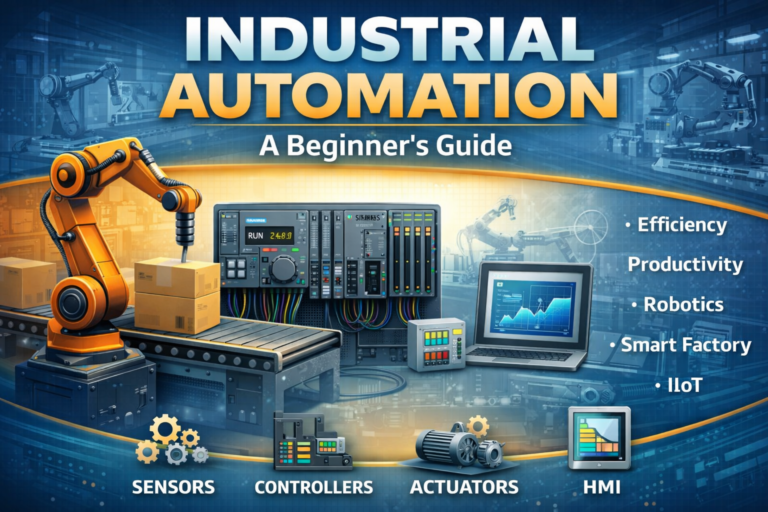
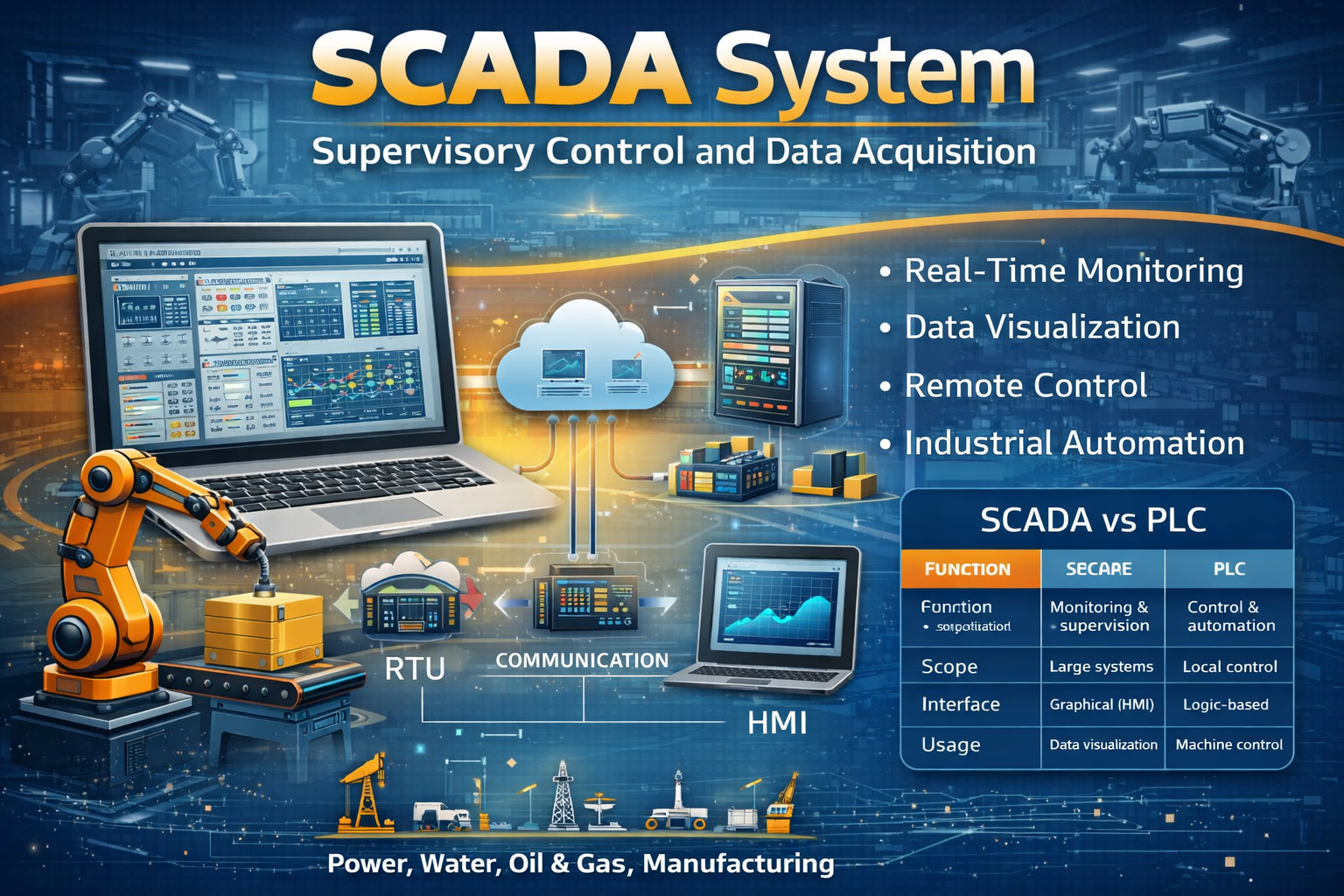
A SCADA system collects data from field devices and sends it to a central system for monitoring and control. The main process includes:
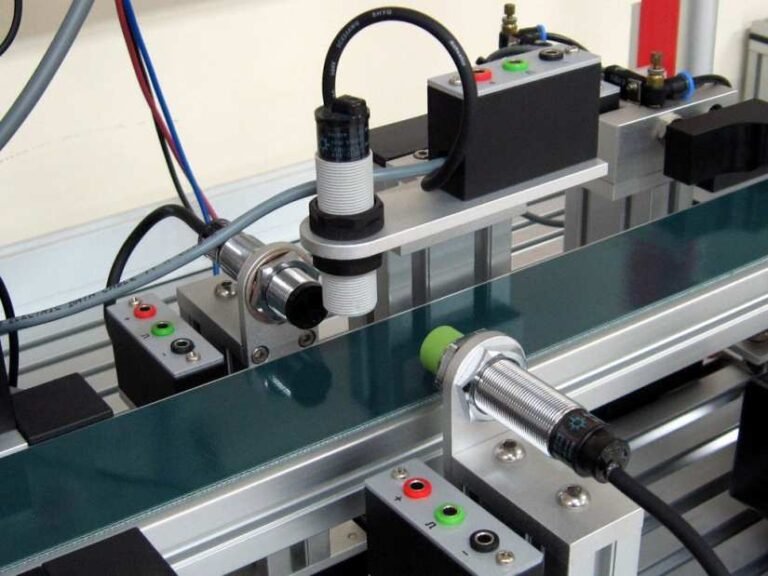
- Data Collection – Sensors and PLCs gather real-time data
- Communication – Data is transmitted to the control center
- Processing – SCADA software analyzes the data
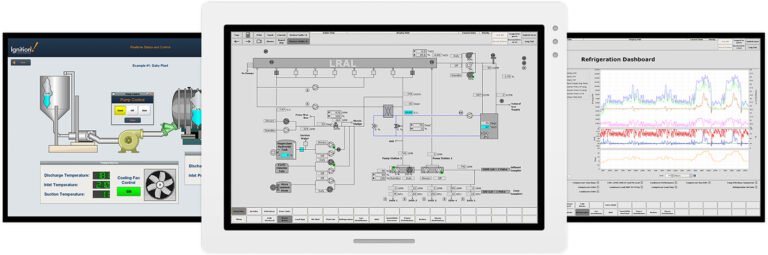
- Visualization – Operators view data through graphical interfaces
- Control – Commands are sent back to field devices
Key Components of SCADA
1. Remote Terminal Units (RTUs)
RTUs collect data from sensors and transmit it to the SCADA system.
2. Programmable Logic Controllers (PLCs)
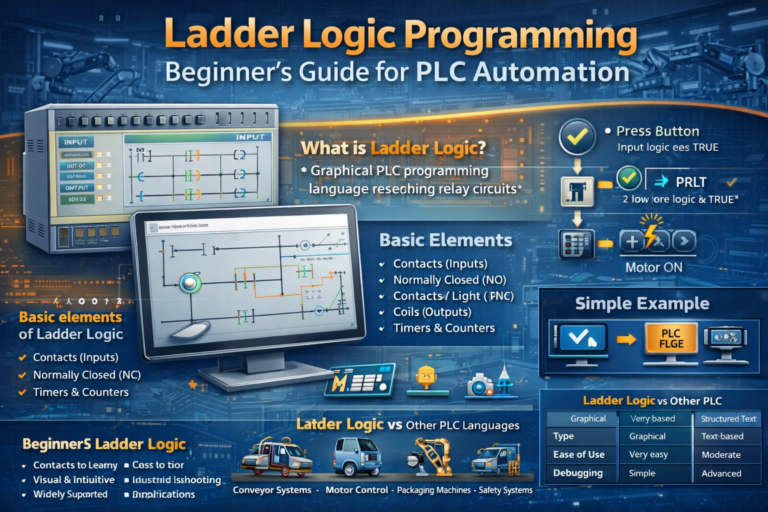
PLCs act as local controllers for automation processes.
3. Human Machine Interface (HMI)
Provides a visual interface for operators to monitor and control systems.
4. Communication Network
Enables data transfer between devices and control centers.
5. SCADA Software
Processes, stores, and displays data in real time.
Types of SCADA Systems
1. Traditional SCADA
- Uses centralized systems
- Limited scalability
2. Distributed SCADA
- Multiple control systems
- Improved reliability
3. Networked SCADA
- Uses modern networks and cloud technologies
- Highly scalable and flexible
Advantages of SCADA Systems
- Real-time monitoring and control
- Improved operational efficiency
- Reduced downtime
- Better decision-making with data analysis
- Remote access to systems
SCADA Applications
SCADA systems are used in:
- Power generation and distribution
- Water and wastewater treatment
- Oil and gas pipelines
- Manufacturing industries
- Transportation systems
SCADA vs PLC
| Feature | SCADA | PLC |
|---|---|---|
| Function | Monitoring & supervision | Control & automation |
| Scope | Large systems | Local control |
| Interface | Graphical (HMI) | Logic-based |
| Usage | Data visualization | Machine control |
SCADA Security Challenges
As SCADA systems become more connected, cybersecurity is crucial:
- Risk of cyberattacks
- Data breaches
- System vulnerabilities
Implementing strong security measures is essential to protect industrial operations.
Future of SCADA
Modern SCADA systems are evolving with:
- Cloud computing
- Industrial IoT (IIoT)
- AI-driven analytics
- Remote monitoring via mobile devices
These innovations are making SCADA smarter and more efficient.
Conclusion
SCADA systems are essential for monitoring and controlling industrial processes. By providing real-time data and remote access, they help industries operate efficiently and safely.
As technology advances, SCADA systems will continue to play a vital role in the future of industrial automation.