Robot Programming: Complete Guide and Most Popular Software in Industrial Automation
What is Robot Programming?
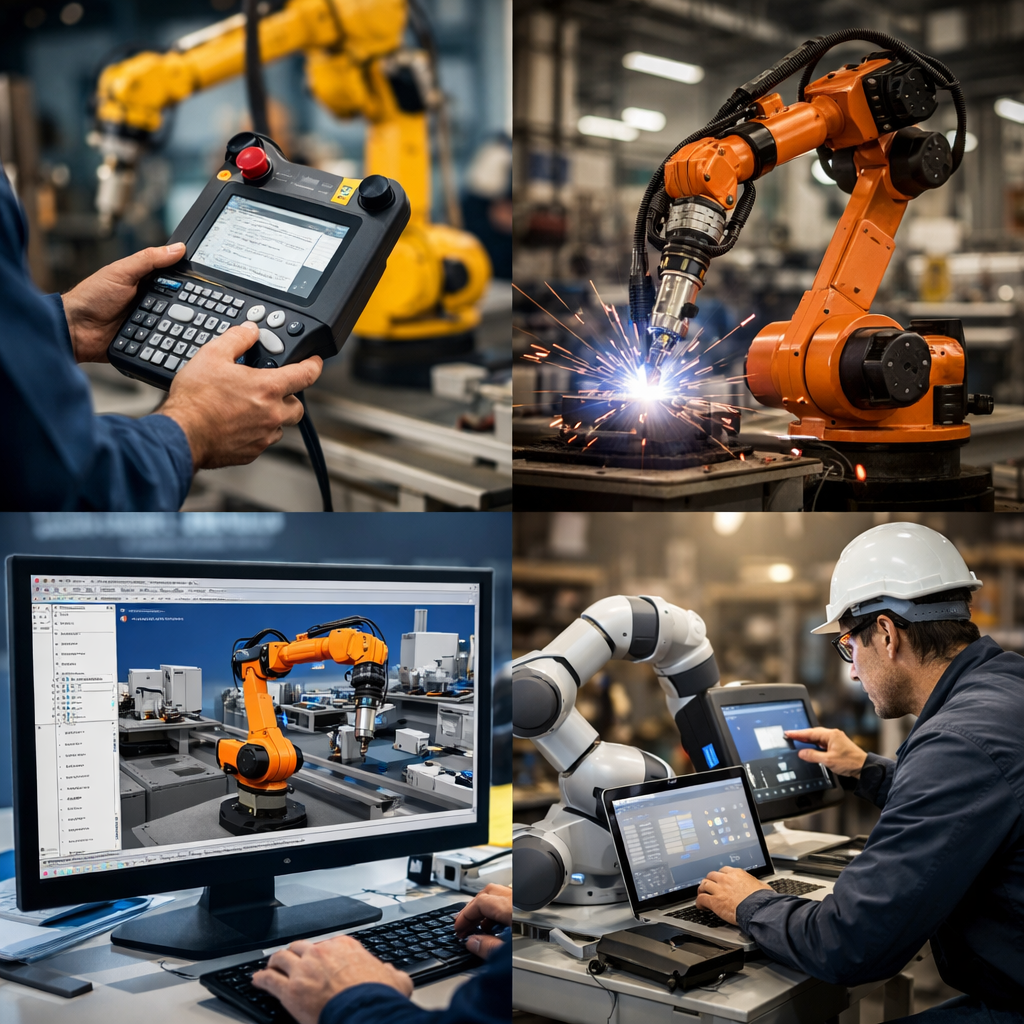
Robot programming is the process of creating instructions that control the movement and actions of industrial robots. These programs define how robots perform tasks such as welding, assembly, packaging, and material handling.
Robot programming is essential in modern automation systems, enabling high precision, speed, and efficiency.
How Does Robot Programming Work?
Robot programming involves defining sequences of movements and actions:
- Define robot positions and paths
- Set speed and motion parameters
- Program logic and conditions
- Execute and test the program
- Optimize for efficiency and safety
Robots follow these instructions to perform tasks automatically.
Types of Robot Programming
1. Teach Pendant Programming
- Manual programming using a handheld device
- Operator guides the robot step by step
- Common in industrial settings
2. Offline Programming
- Programming done on a computer
- No need to stop production
- Uses simulation software
3. Lead-Through Programming
- Robot is physically guided through motions
- Records movements for repetition
Most Popular Robot Programming Software
1. ROBOGUIDE (FANUC)
- Offline programming and simulation
- Used for FANUC robots
- 3D visualization and testing
2. RobotStudio (ABB)
- Advanced simulation environment
- Realistic robot modeling
- Offline programming capabilities
3. KUKA Sim (KUKA)
- Simulation and programming tool
- Optimizes robot paths
- Reduces setup time
4. URSim (Universal Robots)
- Easy-to-use interface
- Ideal for beginners
- Simulates collaborative robots (cobots)
5. MotoSim (Yaskawa)
- Offline programming for Motoman robots
- Improves efficiency and safety
Programming Languages Used in Robotics
- RAPID (ABB robots)
- KRL (KUKA Robot Language)
- VAL3 (Stäubli robots)
- URScript (Universal Robots)
- Ladder Logic & Structured Text (for PLC-controlled robots)
Advantages of Robot Programming
- High precision and repeatability
- Increased productivity
- Reduced human labor
- Improved safety
- Consistent quality
Applications of Robot Programming
Robot programming is used in:
- Automotive manufacturing
- Welding and painting
- Packaging and palletizing
- Electronics assembly
- Food processing
Challenges in Robot Programming
- Complexity for beginners
- High setup cost
- Need for skilled engineers
- Integration with other systems
Future of Robot Programming
Robot programming is evolving with:
- AI and machine learning
- Collaborative robots (cobots)
- Vision systems integration
- Cloud-based programming
- Digital twins and simulation
Conclusion
Robot programming is a key part of industrial automation, allowing robots to perform complex tasks with precision and efficiency. With powerful software tools and modern technologies, programming robots is becoming more accessible and advanced.
Learning robot programming opens the door to careers in robotics, automation, and smart manufacturing.