PLC: The Complete Guide to Programmable Logic Controllers (Beginner to Advanced)
What is a PLC?
A Programmable Logic Controller (PLC) is an industrial digital computer designed to control manufacturing processes, machines, and automation systems. Unlike regular computers, PLCs are built to operate in harsh environments such as factories, power plants, and production lines.
PLCs are widely used to automate tasks like:
- Assembly lines
- Packaging systems
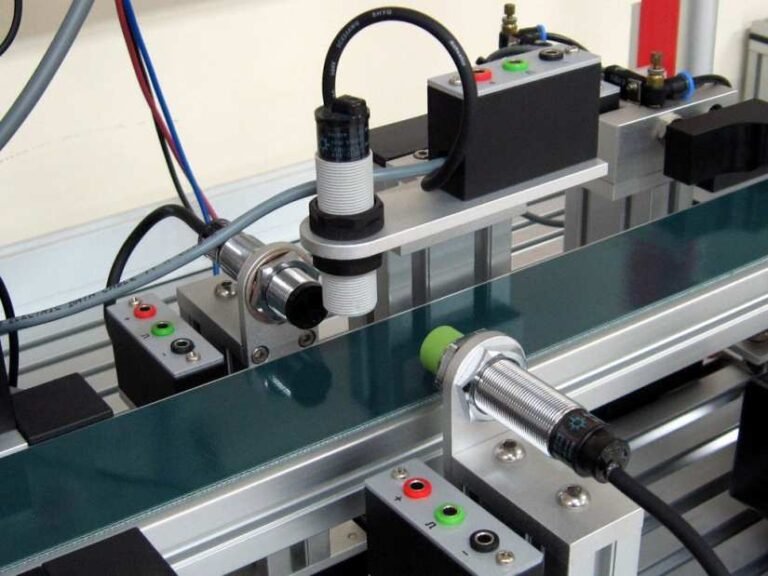
- Conveyor belts
- Robotic systems
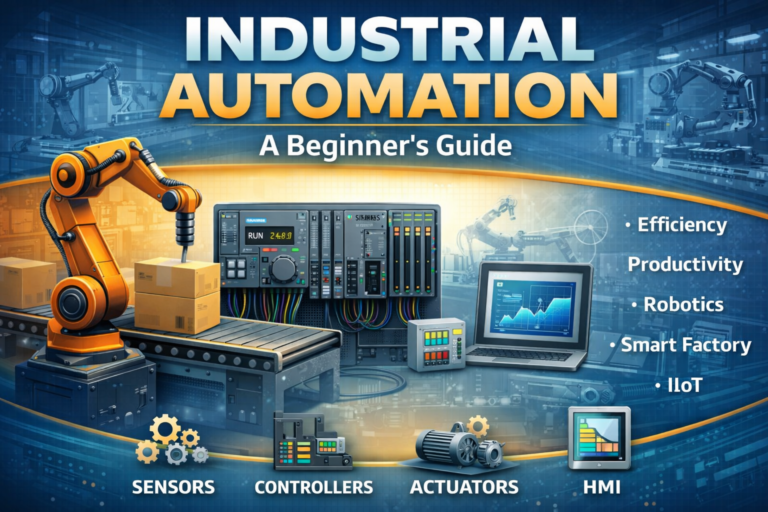
They play a critical role in modern industrial automation by improving efficiency, accuracy, and safety.
How Does a PLC Work?
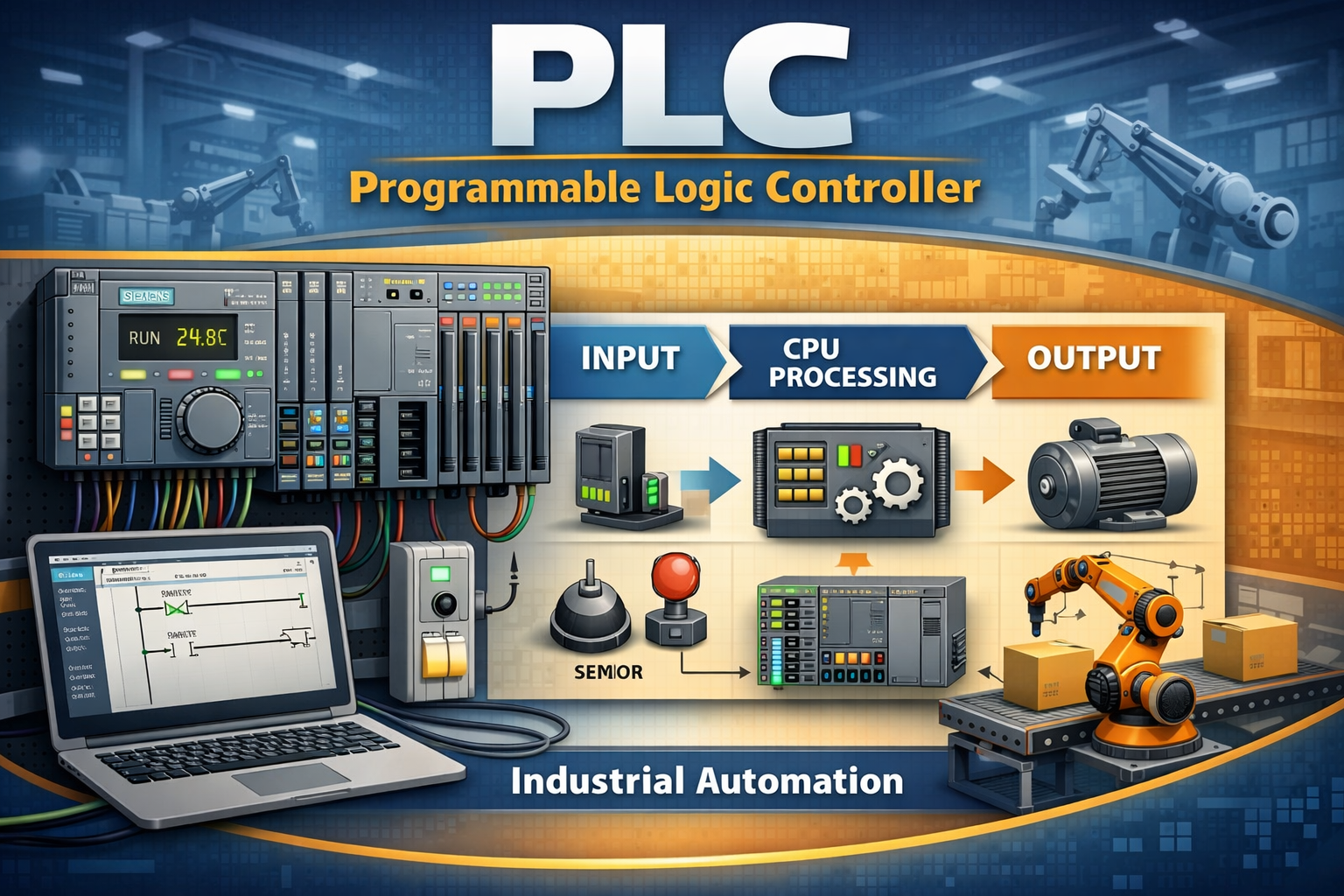
A PLC continuously monitors inputs, processes data, and updates outputs in a cycle known as the scan cycle:
- Input Scan – Reads signals from sensors, switches, or devices
- Program Execution – Executes the control logic stored in memory
- Output Scan – Sends signals to actuators like motors, valves, or lights
This cycle happens extremely fast, often within milliseconds.
Key Components of a PLC
1. CPU (Central Processing Unit)
The brain of the PLC that executes control instructions and processes data.
2. Power Supply
Provides electrical power to the PLC system.
3. Input/Output Modules (I/O)
- Inputs: Receive signals from sensors or switches
- Outputs: Control devices like motors or alarms
4. Programming Device
Used to write and upload programs into the PLC.
5. Memory
Stores the program and operational data.
Types of PLCs
1. Compact PLC
- All components in one unit
- Ideal for small applications
2. Modular PLC
- Separate modules for flexibility
- Suitable for medium to large systems
3. Rack-mounted PLC
- High scalability
- Used in complex industrial environments
PLC Programming Languages
PLC programming follows international standards (IEC 61131-3). The most common languages include:
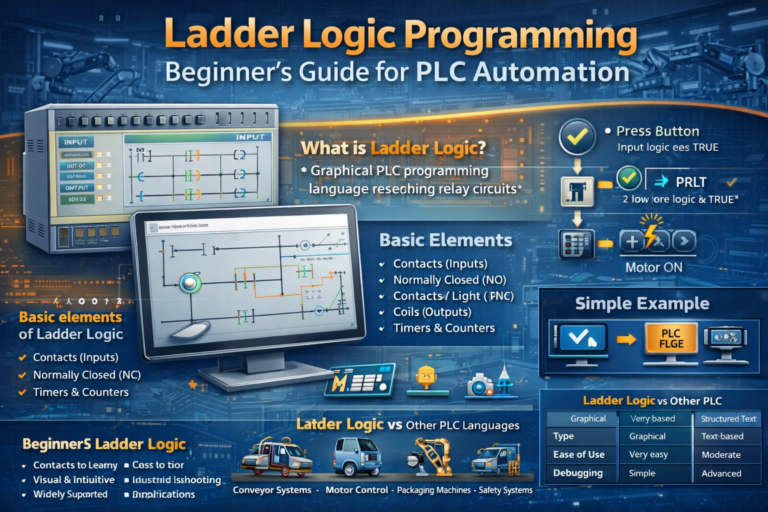
- Ladder Logic (LL) – Most popular, resembles electrical diagrams
- Function Block Diagram (FBD) – Uses graphical blocks
- Structured Text (ST) – Similar to programming languages like Pascal
- Instruction List (IL) – Low-level programming (less used today)
- Sequential Function Chart (SFC) – For step-by-step processes
Advantages of Using PLCs
- High reliability in harsh environments
- Easy to program and modify
- Real-time operation
- Reduced wiring complexity
- Increased productivity and efficiency
PLC Applications
PLCs are used across many industries:
- Manufacturing automation
- Oil and gas systems
- Water treatment plants
- Food and beverage processing
- Automotive industry
| Feature | PLC | Microcontroller |
|---|---|---|
| Environment | Industrial | Consumer electronics |
| Durability | Very high | Moderate |
| Programming | Industrial-focused | General-purpose |
| Cost | Higher | Lower |
SEO Keywords (for WordPress optimization)
Use these keywords throughout your post:
- PLC automation
- Programmable Logic Controller
- Industrial automation PLC
- PLC programming basics
- PLC applications
- Ladder logic programming
Conclusion
Programmable Logic Controllers (PLCs) are the backbone of industrial automation. Whether you’re a beginner or an experienced engineer, understanding PLCs is essential for working in modern industrial environments.
With their reliability, flexibility, and real-time capabilities, PLCs continue to drive innovation and efficiency across industries worldwide.