Ladder Logic Programming: Complete Beginner’s Guide for PLC Automation
What is Ladder Logic?
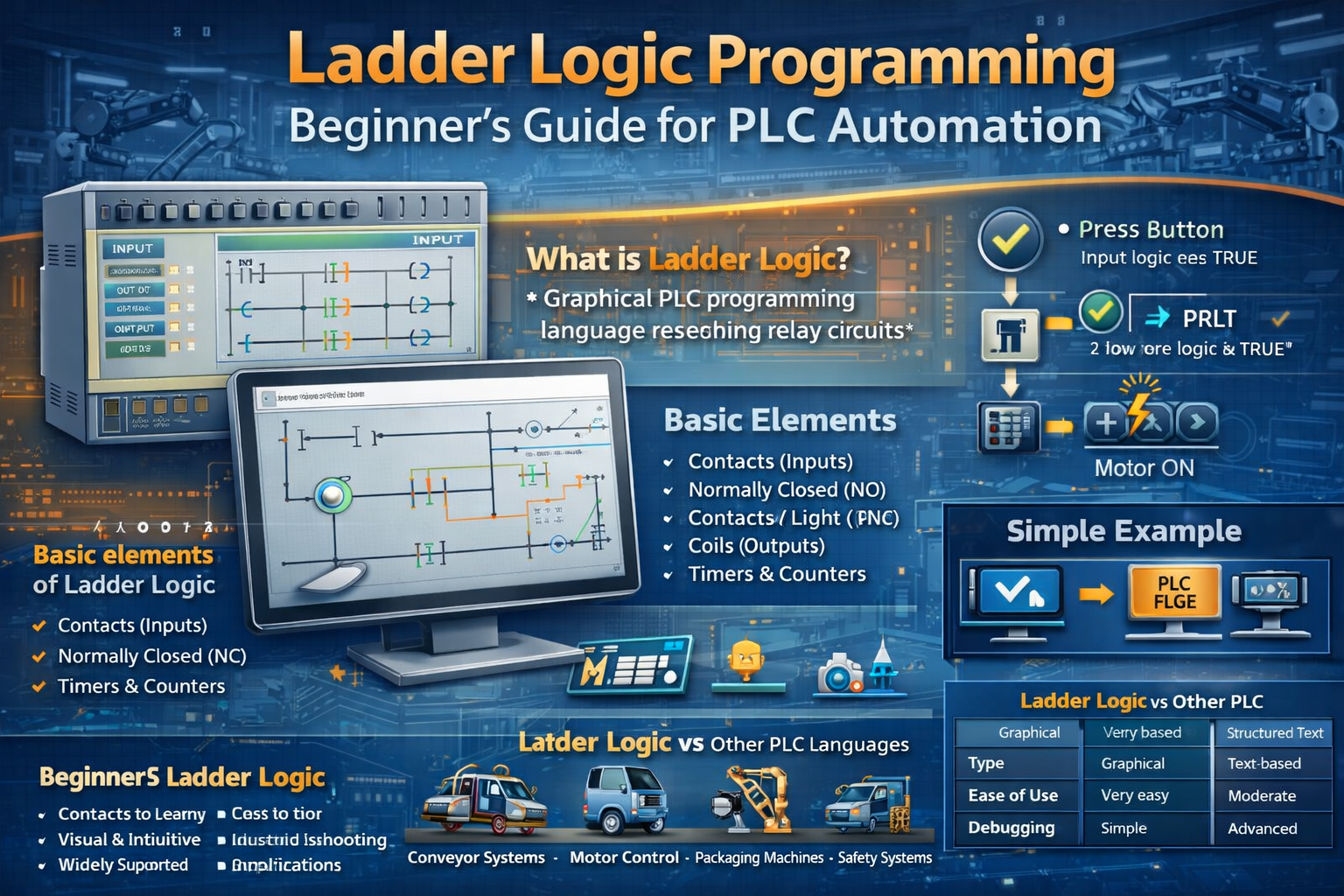
Ladder Logic is a graphical programming language used to program PLCs (Programmable Logic Controllers). It is one of the most popular languages in industrial automation because it resembles electrical relay circuits.
It uses symbols like contacts and coils to represent logical operations, making it easy for electricians and engineers to understand.
How Does Ladder Logic Work?
Ladder Logic is structured like a ladder:
- Two vertical rails represent power supply
- Horizontal rungs represent control logic
Each rung contains conditions (inputs) and actions (outputs).
When the logic conditions are true, the output is activated.
Basic Elements of Ladder Logic
1. Contacts (Inputs)
- Normally Open (NO)
- Normally Closed (NC)
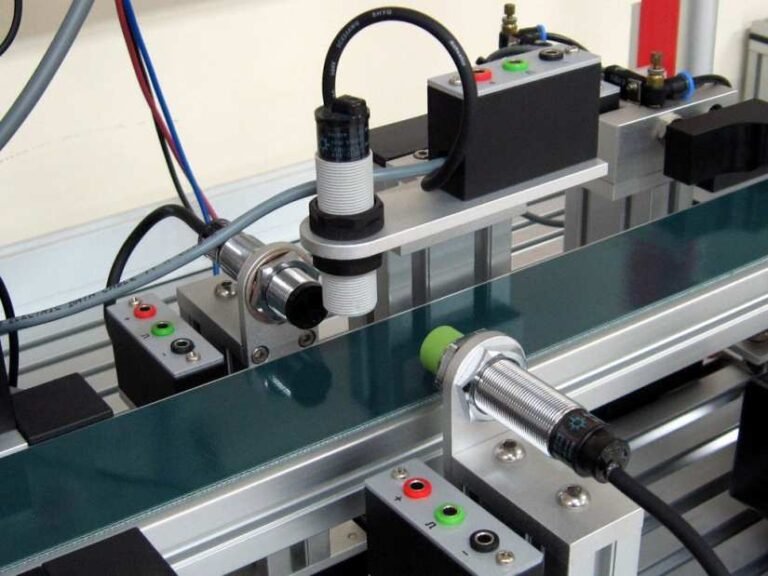
These represent input conditions like switches or sensors.
2. Coils (Outputs)
- Represent output devices such as motors, lights, or alarms
3. Rungs
- Lines of logic that control outputs
4. Timers and Counters
- Used for delays and counting operations
Simple Ladder Logic Example
Example: Turning ON a motor with a push button
- Press button → Input becomes TRUE
- PLC processes logic
- Output coil activates → Motor turns ON
Advantages of Ladder Logic
- Easy to learn and use
- Visual and intuitive
- Widely supported in PLC systems
- Ideal for troubleshooting
Ladder Logic Applications
Ladder Logic is used in:
- Conveyor systems
- Motor control circuits
- Packaging machines
- Industrial automation systems
- Safety control systems
Ladder Logic vs Other PLC Languages
| Feature | Ladder Logic | Structured Text |
|---|---|---|
| Type | Graphical | Text-based |
| Ease of Use | Very easy | Moderate |
| Debugging | Simple | Advanced |
| Usage | Widely used | Complex systems |
Common Ladder Logic Instructions
- AND / OR logic
- Set/Reset (Latch/Unlatch)
- Timers (TON, TOF)
- Counters (CTU, CTD)
These instructions help create complex automation sequences.
Tips for Beginners
- Start with simple circuits
- Use clear naming for inputs/outputs
- Test logic step by step
- Keep programs organized
- Practice with real examples
Future of Ladder Logic
Even with advanced programming languages, Ladder Logic remains essential in industrial automation due to its simplicity and reliability.
It continues to evolve with modern PLC platforms and software tools.
Conclusion
Ladder Logic is the foundation of PLC programming and industrial automation. Its simplicity, reliability, and visual nature make it the preferred choice for engineers worldwide.
Learning Ladder Logic is a crucial step toward mastering automation systems.