Sensors in Industrial Automation: Types, Working Principles, and Applications
What are Industrial Sensors?
Industrial sensors are devices used to detect physical conditions such as temperature, pressure, motion, or proximity and convert them into electrical signals. These signals are then processed by control systems like PLCs to automate industrial processes.
Sensors are essential components in any automation system, providing real-time data for monitoring and control.
How Do Sensors Work?
Sensors operate by detecting changes in the environment and converting them into signals that machines can understand.
Basic process:
- Detect physical parameter (e.g., temperature, distance)
- Convert it into an electrical signal
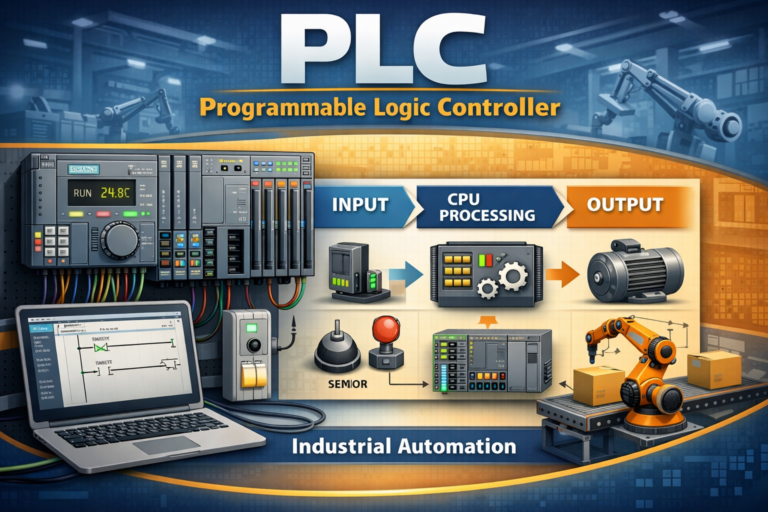
- Send the signal to a controller (PLC or SCADA)
- Controller processes data and triggers action
Types of Industrial Sensors
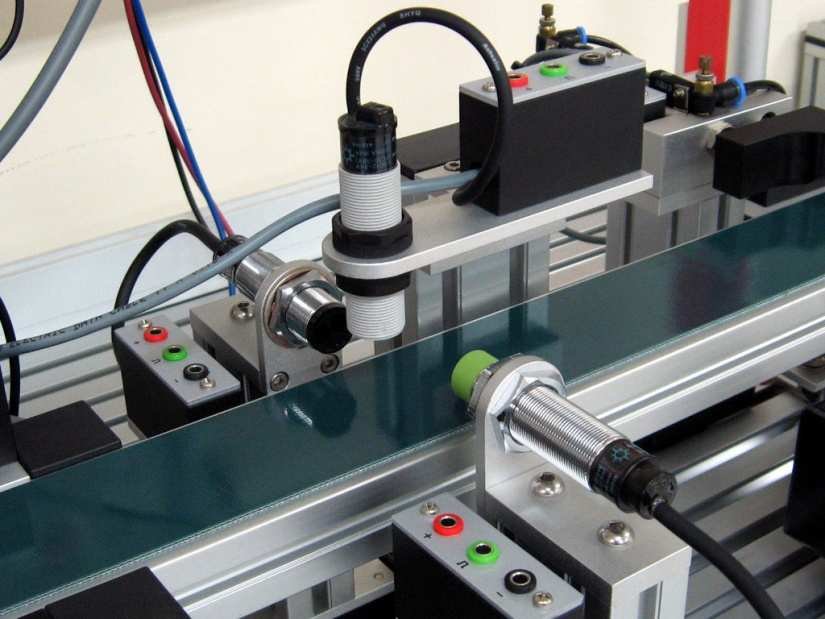
1. Proximity Sensors
- Detect the presence of objects without contact
- Used in conveyor systems and packaging
2. Temperature Sensors
- Measure heat levels
- Common types: thermocouples and RTDs
3. Pressure Sensors
- Measure force applied by fluids or gases
- Used in hydraulic and pneumatic systems
4. Level Sensors
- Detect the level of liquids or solids
- Used in tanks and silos
5. Motion Sensors
- Detect movement or speed
- Used in robotics and security systems
Key Features of Sensors
- High accuracy
- Fast response time
- Durability in harsh environments
- Compact design
- Reliability
Advantages of Using Sensors
- Real-time monitoring
- Improved automation efficiency
- Reduced human intervention
- Increased safety
- Better process control
Applications of Industrial Sensors
Sensors are used across many industries:
- Manufacturing automation
- Oil and gas industry
- Food processing
- Water treatment systems
- Automotive production
Sensors vs Actuators
| Feature | Sensors | Actuators |
|---|---|---|
| Function | Detect input | Perform action |
| Role | Input device | Output device |
| Example | Temperature sensor | Motor |
Challenges in Sensor Usage
- Environmental interference
- Calibration requirements
- Maintenance needs
- Signal noise
Future Trends in Sensors
Sensor technology is evolving rapidly with:
- Smart sensors with built-in processing
- Wireless sensor networks
- IoT integration
- AI-based data analysis
Conclusion
Sensors are the foundation of industrial automation systems, providing critical data that drives decision-making and control processes. Without sensors, automation would not be possible.
As technology advances, sensors will become smarter, more connected, and even more essential in modern industries.