HMI (Human Machine Interface): Complete Guide for Industrial Automation
What is an HMI?
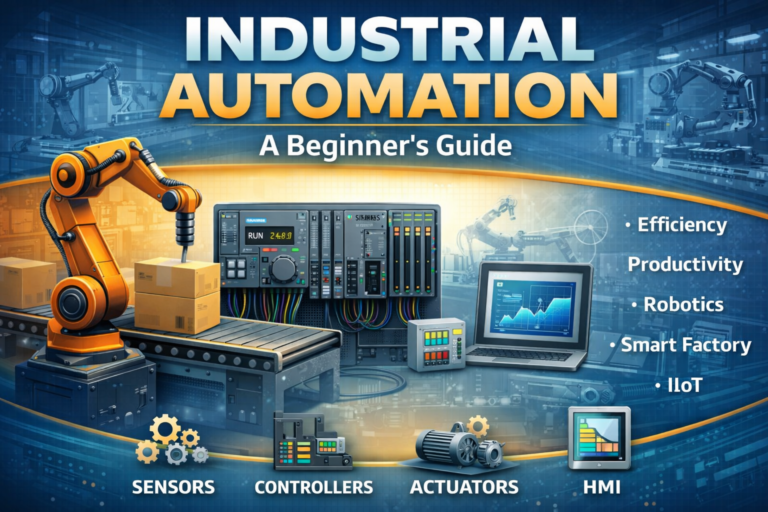
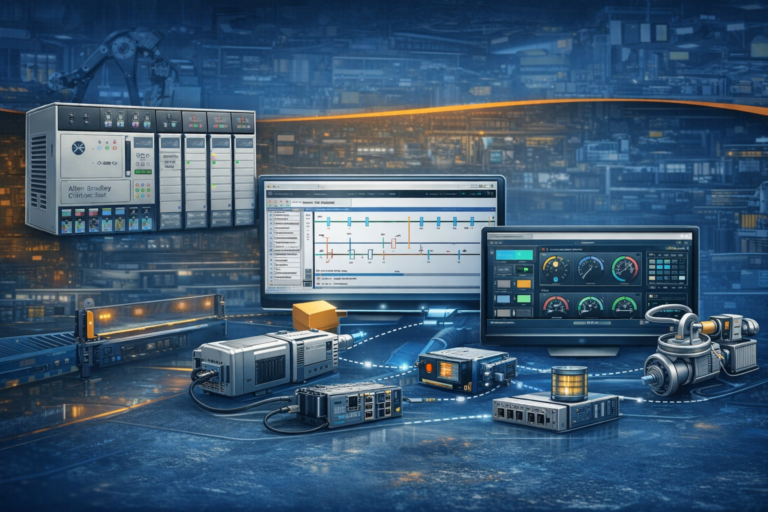
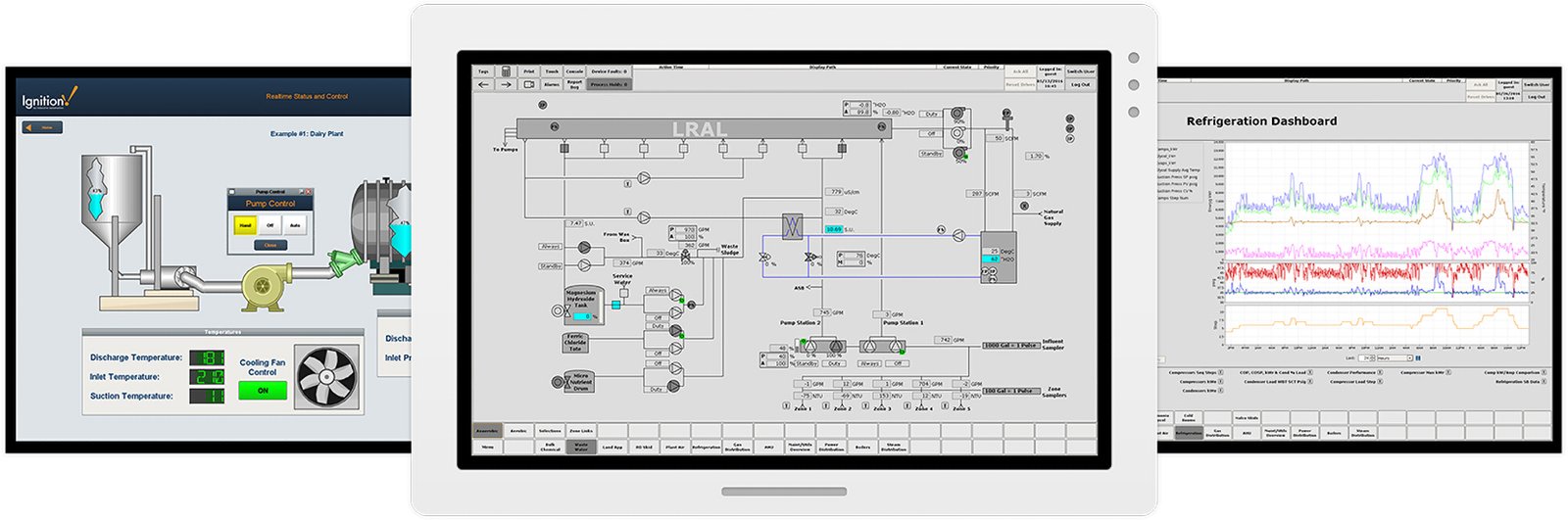
A Human Machine Interface (HMI) is a user interface that allows operators to interact with machines, systems, or devices in industrial environments. It provides real-time visualization of processes and enables control through graphical screens.
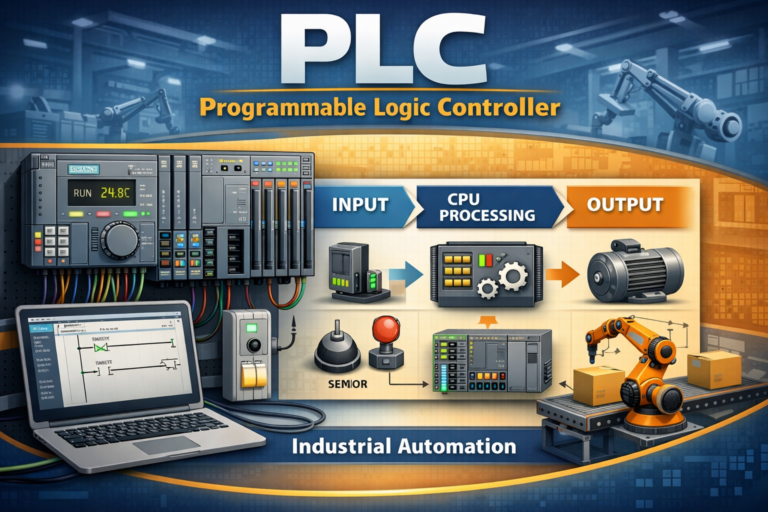
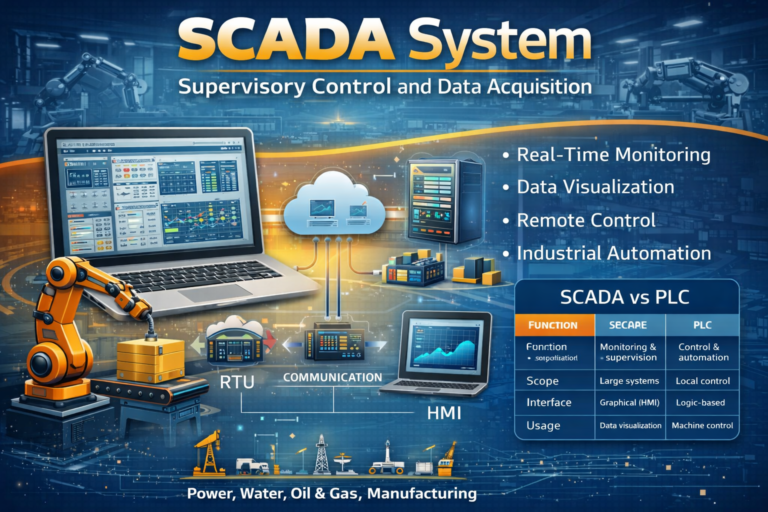
HMIs are commonly used alongside PLC and SCADA systems to monitor and manage industrial operations efficiently.
How Does an HMI Work?
An HMI acts as a bridge between humans and machines:
- Data Collection – Receives data from PLCs and sensors
- Visualization – Displays information using graphs, charts, and dashboards
- User Interaction – Operators input commands via touchscreens or controls
- Control Execution – Sends commands back to the system
Types of HMI Systems
1. Panel HMI
- Mounted on machines
- Touchscreen-based
- Common in factories
2. PC-Based HMI
- Runs on industrial computers
- More powerful and flexible
3. Mobile HMI
- Accessible via smartphones or tablets
- Enables remote monitoring
Key Features of HMI
- Real-time data monitoring
- Graphical visualization (charts, alarms, dashboards)
- User-friendly interface
- Alarm management system
- Data logging and reporting
Advantages of HMI Systems
- Improves operator efficiency
- Reduces human error
- Enhances system control
- Simplifies complex processes
- Provides quick decision-making insights
HMI Applications
HMIs are used in various industries:
- Manufacturing plants
- Energy and power systems
- Water treatment facilities
- Oil and gas industry
- Building automation
HMI vs SCADA
| Feature | HMI | SCADA |
|---|---|---|
| Scope | Local interface | Large-scale monitoring |
| Function | Visualization & control | Data acquisition & supervision |
| Complexity | Simple | Advanced |
| Usage | Machine-level | System-wide |
Best Practices for HMI Design
To create effective HMI systems:
- Keep design simple and clear
- Use consistent colors and symbols
- Highlight alarms and critical data
- Avoid cluttered screens
- Ensure fast response time
Future Trends in HMI
HMI technology is evolving with:
- Touchless interfaces
- Augmented Reality (AR)
- Cloud-based HMI systems
- AI-powered analytics
- Mobile accessibility
Conclusion
Human Machine Interfaces (HMIs) are essential tools in industrial automation, enabling operators to monitor and control systems efficiently. With advancements in technology, HMIs are becoming more intuitive, powerful, and accessible.
Understanding HMI systems is crucial for anyone working in automation, engineering, or industrial control.