Actuators in Industrial Automation: Types, Working Principle, and Applications
What are Actuators?
Actuators are devices that convert electrical, hydraulic, or pneumatic energy into physical motion. In industrial automation, actuators are responsible for performing actions such as moving, rotating, lifting, or controlling mechanisms.
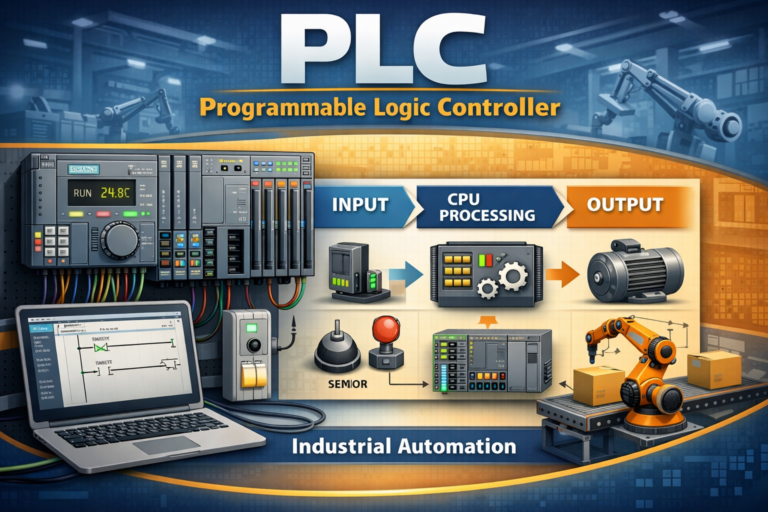
They act as the output devices in automation systems, receiving commands from controllers like PLCs and executing physical tasks.
How Do Actuators Work?
Actuators operate by receiving a control signal and converting it into mechanical motion.
Basic working process:
- PLC sends control signal
- Actuator receives signal
- Energy is converted into motion
- Mechanical action is performed (move, rotate, open, close)
Types of Actuators
1. Electric Actuators
- Powered by electricity
- High precision and control
- Used in robotics and CNC machines
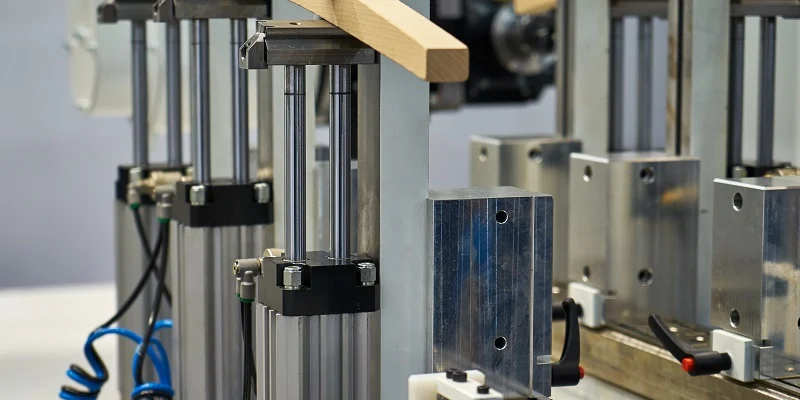
2. Pneumatic Actuators
- Use compressed air
- Fast and cost-effective
- Common in manufacturing systems
3. Hydraulic Actuators
- Use fluid pressure
- High force output
- Used in heavy machinery
4. Linear Actuators
- Produce straight-line motion
- Used in lifting and positioning systems
5. Rotary Actuators
- Produce rotational motion
- Used in motors and valves
Key Features of Actuators
- High efficiency
- Precise control
- Strong force output
- Reliability in industrial environments
- Fast response time
Advantages of Using Actuators
- Enable automation processes
- Improve system efficiency
- Reduce manual labor
- Increase production speed
- Enhance precision
Applications of Actuators
Actuators are used in many industries:
- Manufacturing automation
- Robotics systems
- Automotive industry
- Oil and gas sector
- Aerospace engineering
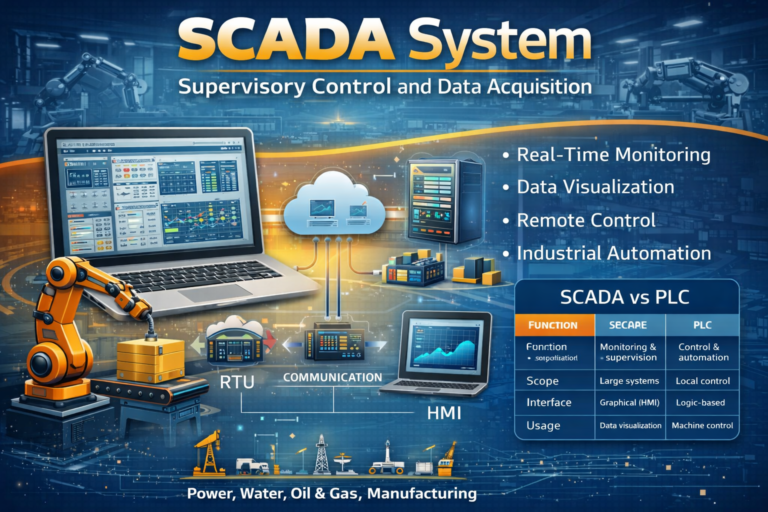
Actuators vs Sensors
| Feature | Actuators | Sensors |
|---|---|---|
| Role | Output device | Input device |
| Function | Perform action | Detect conditions |
| Example | Motor, valve | Temperature sensor |
Challenges in Using Actuators
- Energy consumption
- Maintenance requirements
- Wear and tear
- Control complexity
Future Trends in Actuators
Actuator technology is advancing with:
- Smart actuators with feedback systems
- Integration with IoT
- Energy-efficient designs
- AI-based automation
Conclusion
Actuators are essential components in industrial automation systems, turning control signals into physical actions. Without actuators, machines cannot perform tasks.
Understanding actuators is key to mastering automation and industrial control systems.